
Hydraulic components and systems for defence and military technology

Military hydraulic systems are subject to extreme conditions: varying climatic zones, long periods of inactivity, high load cycles, dust, moisture and the need to be ready for action at all times. Whether in armoured vehicles, naval systems, stationary power plants or logistical facilities – the reliability of the hydraulic system determines the availability of the entire system.

Oil maintenance for mobile and stationary hydraulic systems in military engineering

Military hydraulic systems are subject to extreme conditions: varying climatic zones, long periods of inactivity, high load cycles, dust, moisture and the need to be ready for action at all times. Whether in armoured vehicles, naval systems, stationary power plants or logistical facilities – the reliability of the hydraulic system determines the availability of the entire system.

Operational reliability starts with professional engine oil maintenance

Contaminated hydraulic oil is one of the main causes of wear, malfunctions and premature component failure. Particles, water and oxidation products affect valves, pumps and seals – often gradually and without being noticed for a long time.

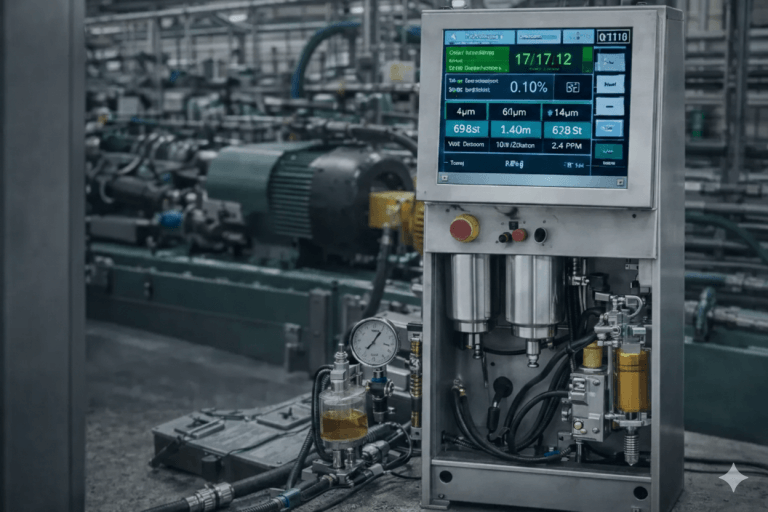
Modern oil maintenance using bypass filtration comes into its own here: rather than filtering only the main flow, a defined sub-flow is continuously and thoroughly purified. This ensures that even the smallest particles and harmful ageing by-products are permanently removed from the oil – regardless of the plant’s operating conditions.

Mobile and stationary hydraulic solutions for maximum flexibility

Mobile service units enable targeted oil maintenance to be carried out directly on the system – even under operating conditions. This ensures that the hydraulic system remains efficient without lengthy downtimes or complex oil-change procedures.

Oil cleaning instead of an oil change

A key principle of modern defence maintenance is: oil purification rather than oil changes. Continuous bypass filtration ensures that:

  • sustainably improved the oil purity grade

  • significantly extends the service life of the fluid

  • wears on critical components is reduced

  • minimises the risk of unplanned downtime

The result is an efficient and sustainable fluid management system that reduces logistical burdens, conserves resources and enhances security of supply – a crucial advantage during international operations.

Benefits for military systems engineering

Improved system availability

Extended service life of oil and components

Reduced maintenance and repair costs

Minimised risks of failure during operation

Sustainable use of operating materials

A contribution to modern lifecycle strategies in the defence sector

Oil maintenance through bypass filtration is more than just routine maintenance – it is a strategic contribution to the operational readiness of military systems. Reliable hydraulics start with clean oil!

Condition monitoring, both mobile and stationary, for applications in the security and defence industries

In the security and defence industry, technical availability is not a luxury – it is a prerequisite. Whether mobile combat vehicles, maritime systems, aviation units or stationary power and hydraulic systems: the condition of fluids plays a decisive role in determining the functionality, safety and service life of complex systems. Condition monitoring provides transparency in this area – both in the field and in stationary applications during continuous operation.

Transparency in the oil cycle – identifying risks at an early stage

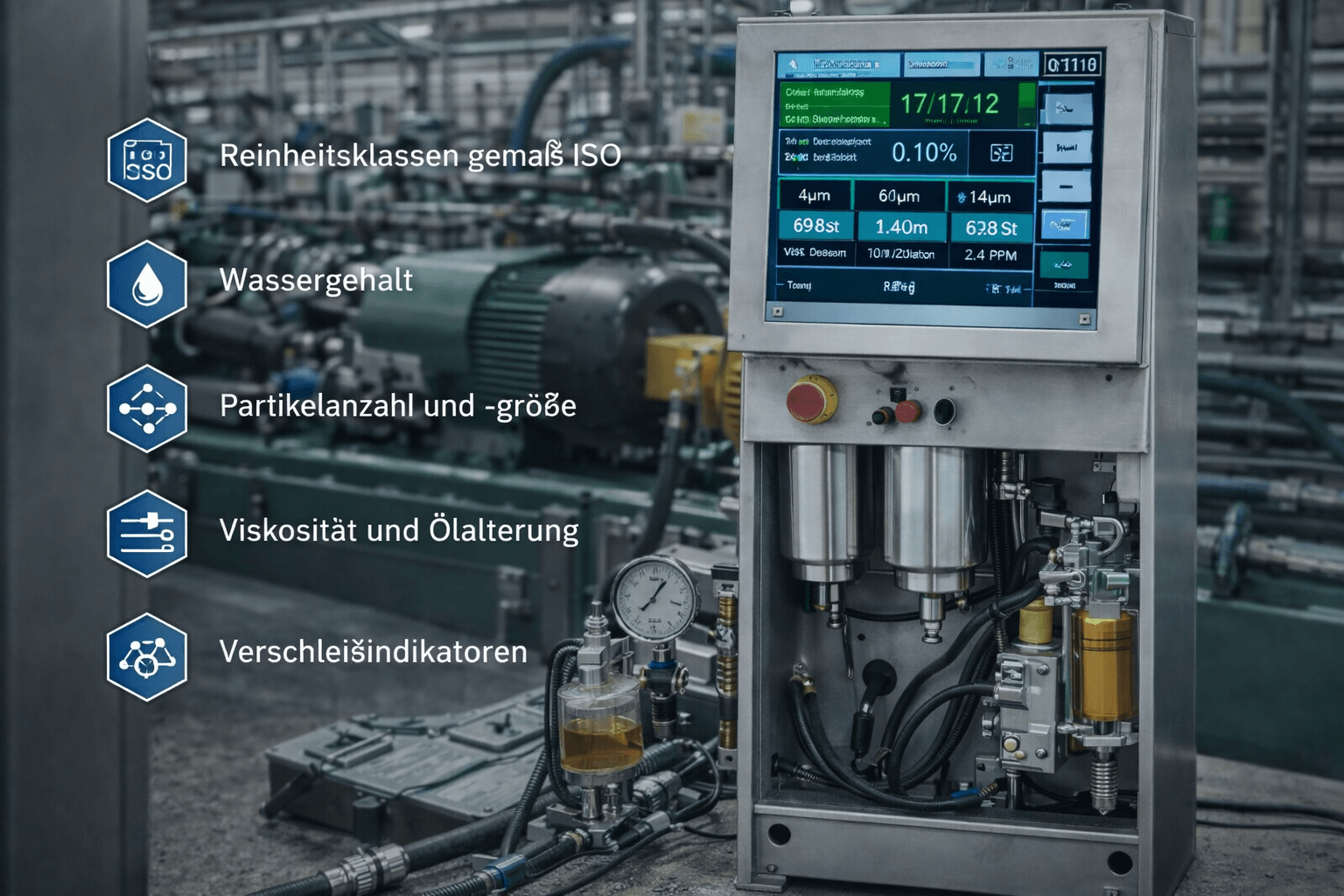
Hydraulic and lubricating oils are operating fluids subjected to high stresses. Particles, water, oxidation and additive degradation have a gradual, insidious effect – often without any visible symptoms. The consequences range from a loss of performance to unplanned system failure. Through targeted condition monitoring, critical parameters are monitored continuously or periodically:

  • Cleanliness classes in accordance with ISO

  • water content

  • Particle count and size

  • Viscosity and oil ageing

  • Wear indicators: Modern particle counters enable a precise assessment of oil cleanliness – either directly on the system or during servicing.

Mobile oil laboratories – analytical capabilities in the field

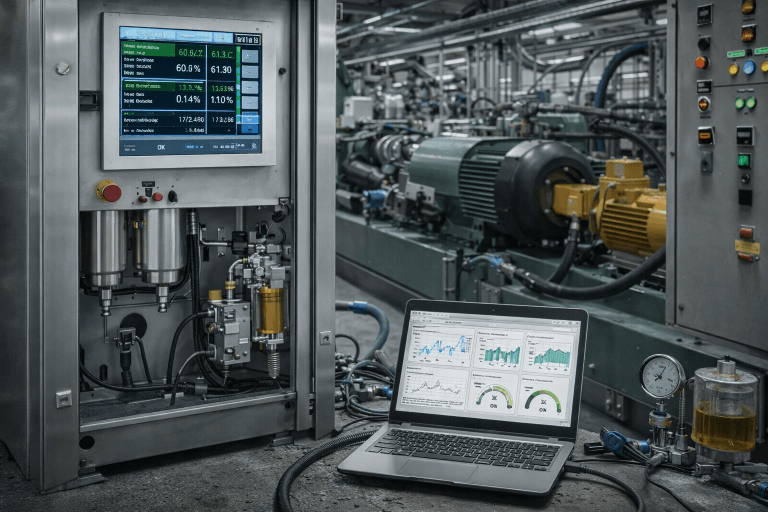
For stationary installations or systems in continuous operation, stationary condition monitoring provides continuous monitoring of critical parameters. Early warning indicators enable: trend analysis, condition-based maintenance, the prevention of unplanned downtime, and the extension of oil and component service life. The result is a structured, data-driven fluid management system that optimises maintenance cycles and deploys resources in a targeted manner.

Fixed Condition Monitoring – Continuous System Monitoring

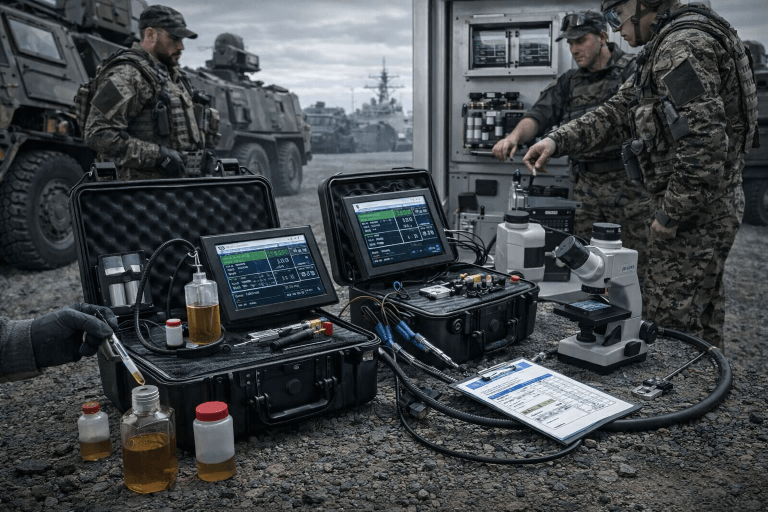
Flexible solutions are crucial, particularly in the defence sector. Mobile oil laboratories enable a professional assessment of oil condition directly on site – without the need for external laboratory facilities. Advantages of mobile systems: a rapid basis for decision-making in the field, minimised downtime, immediate recommendations for action, and support for maintenance teams. In this way, oil analyses are not only documented but actively integrated into the operational strategy.

Transparency in the oil cycle – identifying risks at an early stage

Hydraulic and lubricating oils are highly stressed operating fluids. Particles, water, oxidation, and additive degradation have a gradual impact – often without visible symptoms. The consequences range from performance loss to unplanned system failure. Targeted condition monitoring continuously or periodically monitors critical parameters:

  • Purity classes according to ISO

  • Water content

  • Particle number and size

  • Viscosity and oil aging

  • Wear indicators: Modern particle counters enable a precise assessment of oil cleanliness – directly on the system or during service operations.

Mobile oil laboratories – analytical capabilities in the field

Flexible solutions are crucial, particularly in the defence sector. Mobile oil laboratories enable a professional assessment of oil condition directly on site – without the need for external laboratory facilities. Advantages of mobile systems: a rapid basis for decision-making in the field, minimised downtime, immediate recommendations for action, and support for maintenance teams. In this way, oil analyses are not only documented but actively integrated into the operational strategy.

Fixed Condition Monitoring – Continuous System Monitoring

For stationary installations or systems in continuous operation, stationary condition monitoring provides continuous monitoring of critical parameters. Early warning indicators enable: trend analysis, condition-based maintenance, the prevention of unplanned downtime, and the extension of oil and component service life. The result is a structured, data-driven fluid management system that optimises maintenance cycles and deploys resources in a targeted manner.

Bespoke hydraulic control blocks for use in the defence industry

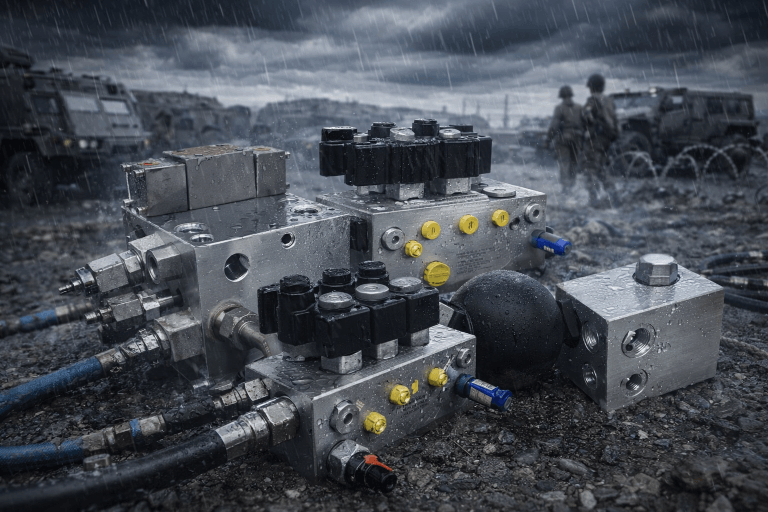
Hydraulic systems in the defence industry are subject to extreme demands in terms of precision, durability and reliability. Whether in armoured vehicles, naval systems, stationary defence installations or specialised logistics solutions – the reliable control of hydraulic functions is critical to safety. At the heart of these systems are custom-designed control blocks.

Functional integration of the highest standard

A modern hydraulic control block combines several functions within a very small space. By integrating various valve functions into a single compact block, the number of potential leak points is reduced, pressure losses are minimised, installation effort is reduced and response times are optimised. Compact and robust valve blocks offer decisive advantages, particularly in military applications where installation space is limited and operating loads are high.

Bespoke valve blocks – designed for the specific application

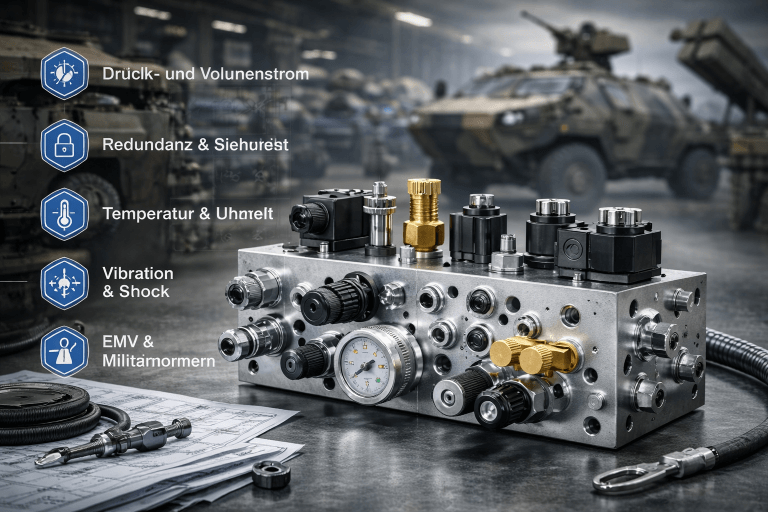
Off-the-shelf solutions quickly reach their limits in the defence sector. That is why the focus is on bespoke valve blocks, fitted with valves to meet specific requirements. The design takes into account: pressure and flow rate requirements, redundancy and safety concepts, temperature and environmental influences, vibration and shock loads, as well as EMC and military standard requirements. The result is highly integrated assemblies that are precisely tailored to the respective application – from the concept phase right through to series production.

Maximum reliability under extreme conditions

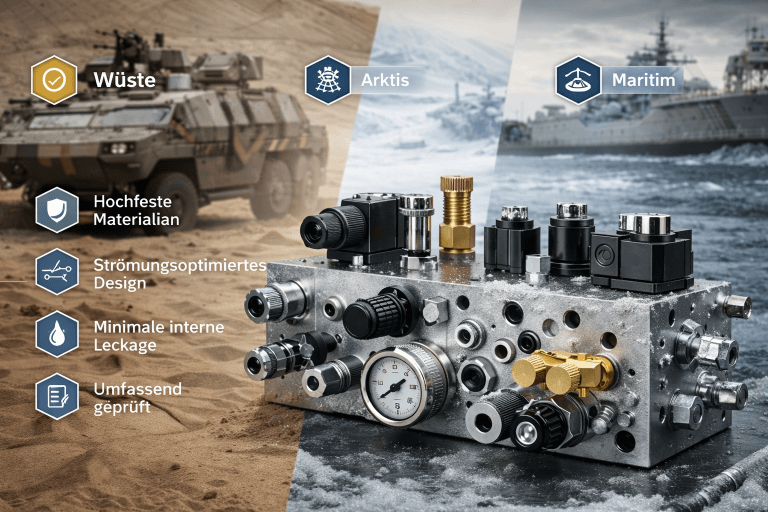
Military systems must operate worldwide – in desert regions, Arctic climates or maritime environments. Accordingly, the valve blocks are manufactured from high-strength materials, designed for optimum flow, engineered to minimise internal leakage, and thoroughly tested and documented. The combination of precise engineering and high-quality valves ensures that the hydraulic control system operates reliably even under extreme conditions.

Hydraulic system integration from a single source

Fewer interfaces

Clear responsibilities

Shorter development times

Optimised system performance

High operational reliability

Custom-designed hydraulic control blocks are therefore a key component of modern military systems engineering. They combine functionality, safety and robustness – precisely tailored to the requirements of the respective application within the defence industry.

Hydraulics – Valves for critical applications in defence technology

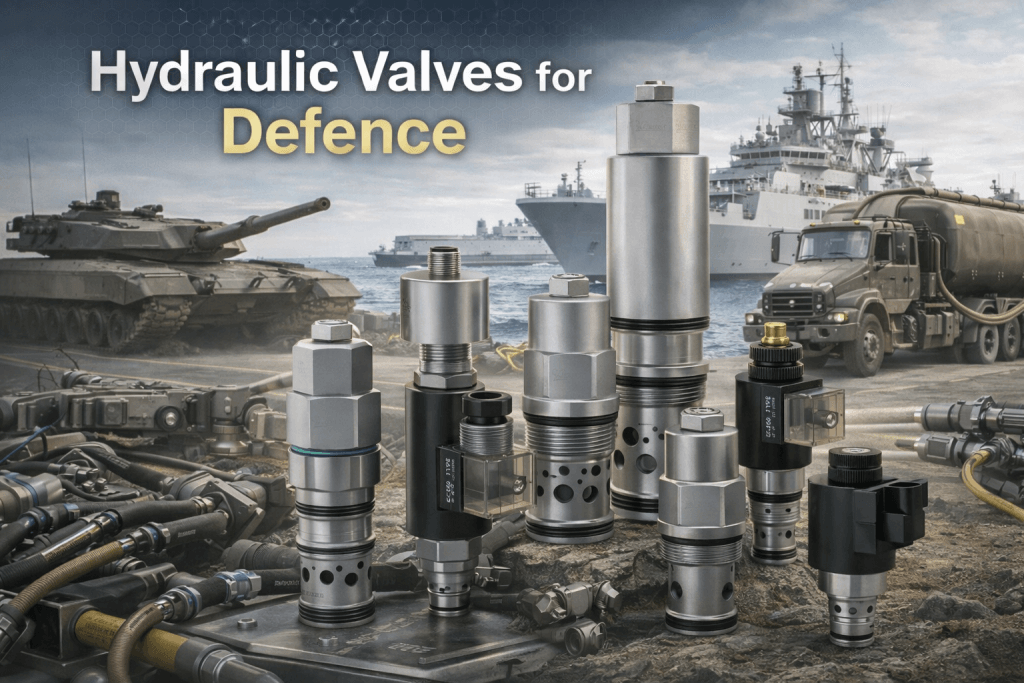
In defence technology, milliseconds, precision and absolute reliability are crucial to the functioning of complex systems. Hydraulic valves perform key control, regulation and safety functions – in mobile combat vehicles, maritime applications, stationary defence systems and specialised vehicles. Only high-performance, robustly designed hydraulic valves are used for these critical applications.

Maximum reliability under extreme conditions

Military systems are subjected to high pressure spikes, severe vibrations, temperature fluctuations and varying load conditions. Under these conditions, hydraulic valves must switch and regulate with precision, remain leak-tight at all times, ensure reproducible performance characteristics and function reliably even when the fluid is contaminated.

Designed for safety-critical systems: Hydraulic valves for defence technology are designed to meet specific requirements: high pressure ranges and cyclic loading, resistance to vibration and shock, temperature resistance, compatibility with military standards, and integration into bespoke control block solutions. Precise design and careful selection of valve technology result in a hydraulic architecture that functions reliably even under extreme operating conditions. Hydraulic valves are therefore a safety-critical core component of modern defence systems. They ensure controlled force, precise movement and maximum operational reliability – even under the most demanding conditions.